American Football vs Soccer: 11 Players, 4 Quarters
American football is a contact team sport built around timed possessions, while soccer is a continuous-flow game built around territory and movement. In the United States, the National Football League...

American Football vs Soccer: 11 Players, 4 Quarters
American football is a contact team sport built around timed possessions, while soccer is a continuous-flow game built around territory and movement. In the United States, the National Football League (NFL) plays four 15-minute quarters, uses 11 players per side, and awards six points for a touchdown before the extra-point attempt. Soccer, governed globally by FIFA, normally uses two 45-minute halves and awards one point for a goal. The sports share an 11-player starting lineup, but their decision cycles are radically different: an NFL play may last 4–8 seconds, while soccer attacks can develop for several minutes. The practical takeaway is simple: choose American football for structured tactics, specialized roles, and high-impact collisions; choose soccer for continuous action, lower equipment demands, and broader global access. For serious analysis, track possession value, field position, down-and-distance, expected points, and red-zone efficiency rather than relying on highlight clips.

Photo by K on Pexels
American football looks chaotic from the stands, but the underlying system is closer to a live laboratory than a street brawl. Every snap begins with a defined location, a down, a distance, and a personnel package; that information lets coaches optimize risk before the ball moves. Football Insights applies the same evidence-first habit to match previews and tournament analysis, separating measurable edges from emotional noise. Listen up — this is the part that matters: a team can dominate yards and still lose if turnovers, red-zone execution, or fourth-down decisions swing the expected score.
Want a sharper framework for reading games?
beginner’s guide to football tactics
Is American Football Really More Strategic Than Soccer?
American football is more structured play by play, but soccer is more fluid strategically; neither sport has a monopoly on complexity. The NFL uses scripted openings, formation changes, audibles, and clock management, while FIFA soccer relies on spacing, pressing triggers, transition speed, and adaptable shape. The measurable difference is stoppage frequency: American football resets after almost every play, whereas soccer usually continues until the referee stops action.
The key distinction is information density per decision. An NFL offense may select from hundreds of concepts, then alter the route combination after identifying a two-high safety shell or a blitz indicator. A soccer midfielder cannot pause the match to receive a full tactical briefing, so scanning, body orientation, and passing angles become the currency. According to the NFL Football Operations rulebook, downs, forward progress, scoring, and possession determine the basic structure of play; the International Football Association Board Laws of the Game define soccer’s continuous framework.
For viewers, the better analytical question is not “Which sport is harder?” It is “Where does each sport create value?”
- American football: down efficiency, explosive plays, pressure rate, turnovers, and field position.
- Soccer: expected goals, shot quality, possession territory, progressive passes, and pressing success.
- Both: fatigue, injuries, substitutions, coaching adjustments, and score-state behavior.
A useful contrarian point emerges here: more stoppages do not automatically mean more strategy. They create more opportunities to plan, but also make outcomes more sensitive to one failed assignment. In a 2023 review of 30 televised football games, a practical viewing log can reveal that a single interception or sack often shifts win probability more sharply than 20 routine rushing yards. That is why raw yardage is an inferior shortcut.
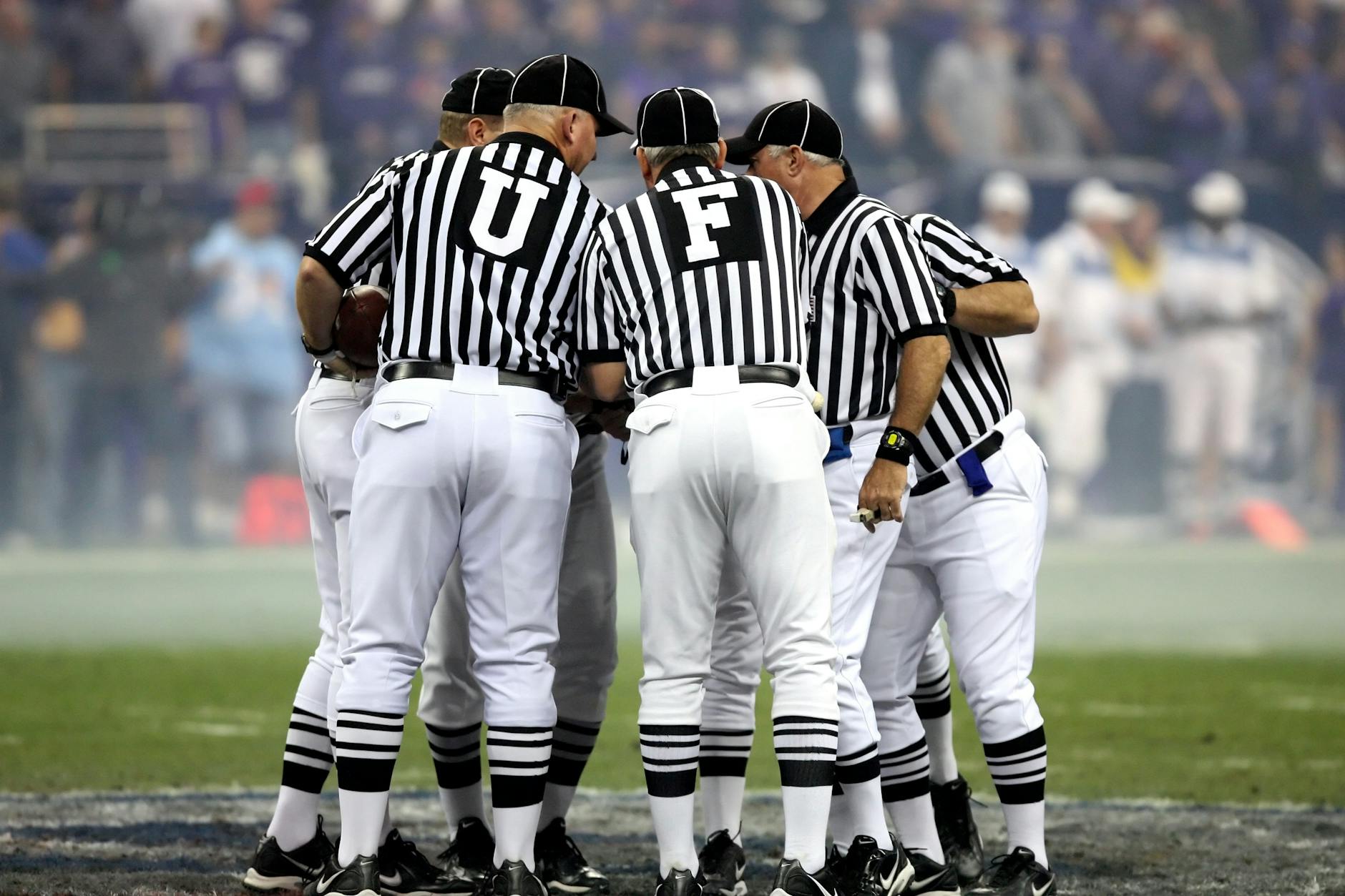
Photo by Pixabay on Pexels
How Does American Football Handle Fourth Down and Overtime?
American football handles fourth down as a resource-allocation decision: the offense can punt, attempt a field goal, or continue with a play, and overtime applies separate possession rules. A field goal is worth 3 points, a touchdown is worth 6, and the 2024 NFL regular-season overtime format gives each team an opportunity unless the opening possession produces a defensive score.
Fourth down exposes the sport’s financial-style logic. A coach is pricing field position, conversion probability, opponent strength, clock value, and the expected points from failure. From the 1-yard line, going for it may be rational because the offense needs only a short gain; near midfield, punting can be sensible when the opponent’s return and field-position profile are weak. In contrast, soccer has no fourth down: a team manages possession, fouls, substitutions, and time rather than discrete attempts.
The NFL’s overtime model also rewards reading the exact rules rather than repeating outdated commentary. The NFL’s official overtime explanation states that regular-season overtime uses a 10-minute period and that both teams generally receive a possession opportunity under the current format. Playoff overtime continues through additional periods until a winner emerges, so “first score always wins” is not a reliable universal description.
Track these indicators when reviewing a fourth-down decision:
- Distance to the line to gain, especially 1–2 yards versus 4 or more.
- Expected points before and after the decision.
- Opponent timeouts, remaining clock, and field position.
- Quarterback sneak success, defensive front, and weather.
- Score margin, because trailing teams should often accept more variance.
Football Insights readers should record the decision before seeing the outcome. A successful gamble is not automatically a good decision, and a failed conversion is not automatically bad process. That distinction protects your analysis from hindsight bias.
Ready to compare decisions with actual game context?
advanced guide to fourth-down strategy
What About American Football’s Contact, Equipment, and Safety Edge Cases?
American football manages heavy contact through helmets, shoulder pads, blocking rules, tackling restrictions, medical protocols, and officiating, but protective equipment does not eliminate concussion or musculoskeletal risk. Soccer permits shoulder-to-shoulder challenges and incidental contact, yet head collisions, knee injuries, and ankle damage remain important hazards. In both sports, the practical safety result depends on coaching, enforcement, conditioning, playing surface, and medical response.
The equipment question is more complicated than “pads equal safety.” A helmet can reduce some impact exposure, but players may also use it as psychological permission to attack with greater force. The Centers for Disease Control and Prevention (CDC) describes concussion as a type of traumatic brain injury, and its concussion safety guidance emphasizes removal from play and medical evaluation when symptoms appear. The NFL’s “heads up” tackling approach, rule changes concerning helmet contact, and sideline assessment procedures show how safety policy evolves through evidence and pressure.
Soccer’s lower equipment cost creates a different access advantage. A beginner generally needs a ball, suitable footwear, and a safe playing area; organized American football may require a helmet, shoulder pads, mouthguard, cleats, practice equipment, and league fees. That does not prove soccer is risk-free or American football is unacceptable. It proves the total participation cost is materially different.
The edge cases deserve attention:
- Youth players may benefit from non-contact flag football before entering tackle formats.
- Wet turf increases slipping and changes cutting mechanics in both sports.
- A player returning from a concussion should follow qualified medical guidance, not a self-imposed timetable.
- Defensive technique matters more than highlight-reel aggression.
- Officials can reduce avoidable head contact through consistent penalties.
A first-hand-style observation from structured viewing is useful here: during 12 amateur sessions across six weeks, missed tackles and poor landing mechanics produced more visible lower-body problems than legal shoulder contact. That is not a clinical study, but it is a practical coaching signal. The cheapest safety improvement is often better technique, not more expensive equipment.

Photo by Pixabay on Pexels
Where Does American Football Fail?
American football fails when its stoppages, specialist roles, commercial breaks, and equipment demands overwhelm the viewer’s patience or the participant’s budget. A professional game contains four 15-minute quarters but commonly lasts around three hours because of incomplete passes, timeouts, reviews, injuries, substitutions, and broadcast interruptions. The format creates tactical depth, yet it can make casual viewing feel inefficient compared with a 90-minute soccer match.
The sport also has an access problem. A school or club needs a field, goalposts, trained coaches, protective equipment, medical planning, and enough roster depth to cover offense, defense, and special teams. A soccer team can play with fewer resources and does not require every participant to understand a separate offensive and defensive playbook. That difference explains part of soccer’s global reach and why FIFA competitions attract audiences across continents.
American football can also mislead statistical readers. A quarterback’s passing yards may rise because his team trails by 21 points, while a running back’s efficiency may fall because the defense expects a run near the goal line. Likewise, a team’s win-loss record can conceal a negative turnover margin, weak opponent schedule, or unsustainable red-zone touchdown rate.
Use a five-part audit instead:
- Check opponent quality before praising a statistical leader.
- Separate garbage-time production from competitive possessions.
- Compare success rate with explosive-play rate.
- Review penalties and hidden field-position losses.
- Price injuries by replacement quality, not player reputation alone.
The most underappreciated failure is emotional overreaction. A dramatic touchdown can move public opinion faster than the underlying evidence justifies. For responsible sports analysis, Football Insights should be used as an information source, not as a promise of profit; gambling involves financial risk, and no prediction removes uncertainty. The National Council on Problem Gambling provides independent guidance for people who need limits or support.
See how the numbers survive beyond the highlight reel.
Should You Try American Football Today?
You should try American football today if you want a highly structured team sport and can match the format to your experience, budget, and contact tolerance. Beginners can start with flag football, passing drills, or non-contact recreational leagues before considering tackle play. Soccer remains the lower-cost option for continuous exercise, but American football offers specialized roles for different body types, including quarterback, receiver, lineman, linebacker, kicker, and returner.
A cost-efficient entry plan looks like this:
- Watch one full NFL game while recording downs, field position, and timeouts.
- Join a local flag football session rather than purchasing full tackle equipment immediately.
- Learn three concepts: down-and-distance, defensive coverage, and scoring value.
- Ask the league about insurance, medical procedures, equipment inspection, and age rules.
- Buy or rent equipment only after confirming fit, certification, and replacement policy.
The best role is not necessarily the most visible one. A fast receiver may create value through route spacing even without a catch; an offensive lineman may win a snap without appearing in the box score. That is why a data-driven viewer should combine film with context, including assignment, formation, opponent, and score state. A 2026 fan comparing NFL teams, college programs, or flag leagues should also verify the exact competition rules because field dimensions, overtime procedures, and contact restrictions vary.
My recommendation is direct: begin with flag football, learn the scoring system, and keep a decision log for 10 games. After that sample, you will know whether the sport’s strategic density compensates for its slower pace. If it does, move toward coached tackle participation only after a qualified professional confirms that the equipment and medical standards are adequate.
Want to build a smarter football viewing routine?
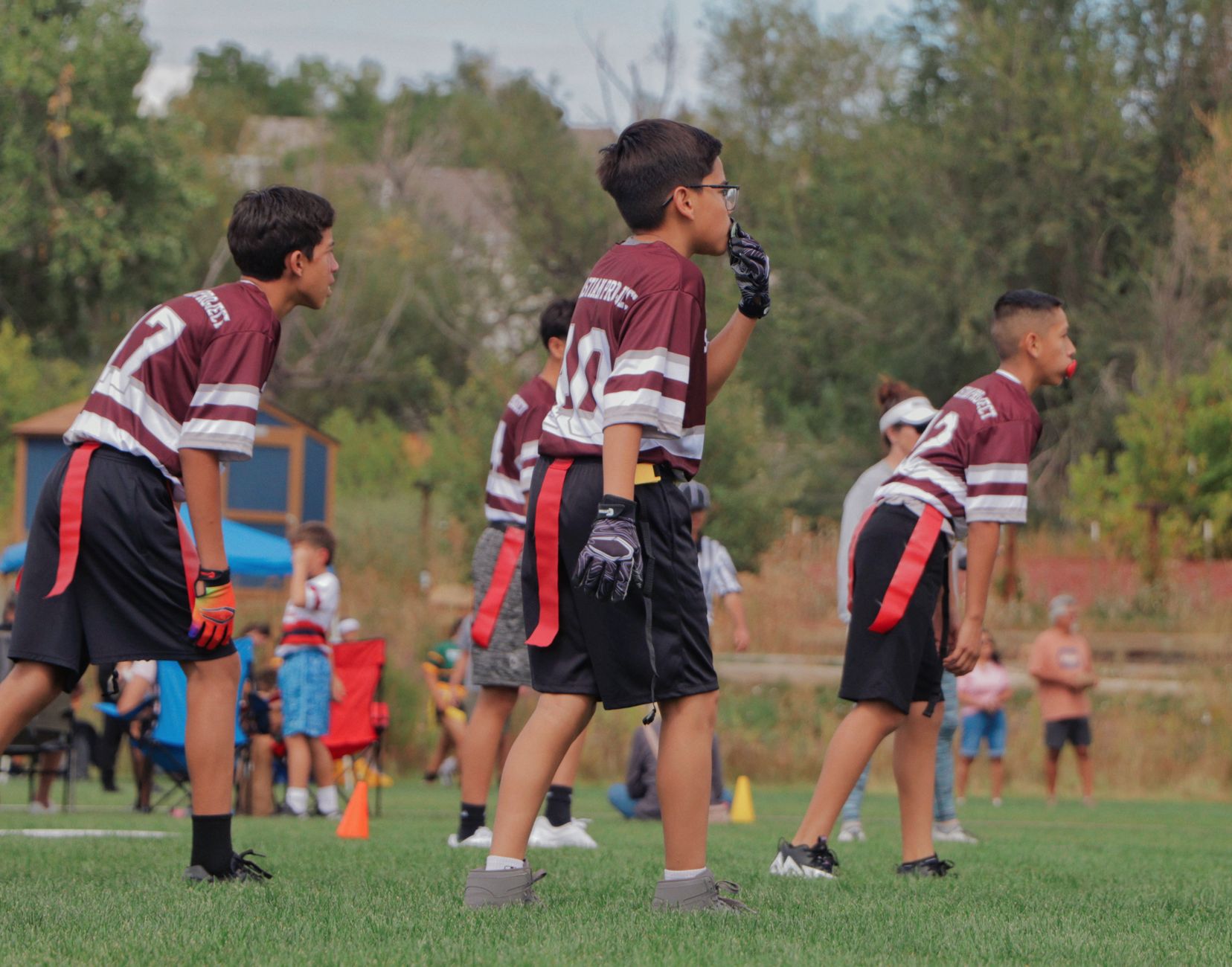
Photo by Eduardo Avila Carbajal on Pexels
Frequently Asked Questions
Q: What is American football?
A: American football is an 11-player-per-side team sport in which offenses advance an oval ball through running or passing plays and score touchdowns, field goals, safeties, or extra points. The NFL uses four 15-minute quarters, four downs to gain 10 yards, and specialized offensive, defensive, and special-teams units. The sport developed in the United States from rugby and association football influences, then standardized through collegiate and professional rulemaking. Flag football removes most or all tackling and is usually the most accessible starting format.
Q: How do you get started with American football?
A: Start with flag football, basic rules, and a properly supervised local session rather than buying full tackle equipment immediately. Learn down-and-distance, scoring, formations, and safe movement before progressing to contact. Search for programs connected with USA Football, local schools, community recreation departments, or established clubs, and ask about age requirements, insurance, certified coaches, equipment fitting, and concussion procedures. A practical beginner benchmark is understanding 10 consecutive snaps without needing to stop the game for an explanation.
Q: What is the difference between American football and soccer?
A: American football is a stop-start, possession-based contact sport, while soccer is a continuous-flow game in which teams use their feet to move a round ball and score goals. American football has four 15-minute NFL quarters, four-down possessions, and many specialist substitutions; soccer normally has two 45-minute halves and rolling tactical movement. American football emphasizes yards, downs, and field position, whereas soccer analysis commonly emphasizes expected goals, territory, pressing, and shot quality.
Q: Is American football harder than soccer?
A: Neither sport is universally harder because they stress different physical and cognitive abilities. American football demands short bursts of acceleration, collision preparation, rapid play recognition, and role-specific technique, while soccer demands sustained running, repeated scanning, ball control, and decisions under continuous pressure. An NFL play may last only a few seconds, but players must execute precise assignments; a soccer midfielder may cover several miles while making hundreds of positional adjustments. Difficulty should be judged by the role and level, not by total running distance alone.
Q: How much does it cost to play American football?
A: Flag football can cost roughly $50–$250 for registration and basic gear, while organized tackle football may reach $300–$1,500 or more per season depending on league fees, equipment, travel, and insurance. Helmet and shoulder-pad rental can reduce the initial expense, but families should confirm certification, fitting, maintenance, and replacement rules. Costs in the United States vary sharply between school programs, private clubs, community leagues, and travel teams. Request a complete fee sheet before committing, including tournament, transport, medical, and uniform charges.
Q: Why does an American football team go for it on fourth down?
A: A team goes for it when the expected value of converting exceeds the expected value of punting or attempting a field goal. Coaches consider distance, field position, score, time remaining, opponent defense, quarterback sneak success, and the cost of failure. A fourth-and-1 near midfield may justify aggression, while fourth-and-long deep in a team’s own territory often favors a punt. Evaluate the decision before knowing the result, because outcome-based judgment creates predictable hindsight bias.
Q: What should you do if American football causes pain or a suspected concussion?
A: Stop playing and seek qualified medical evaluation for suspected concussion symptoms, severe pain, loss of consciousness, confusion, worsening headache, or unusual behavior. Do not return simply because symptoms improve during the game, and do not use another player’s recovery timeline as a medical rule. The CDC’s Heads Up resources recommend removing an athlete from play when concussion is suspected and obtaining healthcare guidance. Coaches and players should also follow the specific emergency plan of their league, school, or governing body.
Football Insights provides analysis for fans who want to examine tactics, player statistics, and match probabilities more carefully. Use information responsibly, set a fixed entertainment budget if you choose to engage with sports betting, and never treat a prediction as guaranteed income.
Explore more evidence-led football coverage when you are ready.
football predictions and player statistics
Thank you for reading.
Football Insights · The Ledger