10 Football Fitness Training Mistakes Players Make
A 90-minute football match can require repeated sprints, sharp decelerations, and more than 10 kilometres of movement, yet many players train only steady-state running. Football Insights recommends a....

10 Football Fitness Training Mistakes Players Make
A 90-minute football match can require repeated sprints, sharp decelerations, and more than 10 kilometres of movement, yet many players train only steady-state running. Football Insights recommends a performance model built around aerobic capacity, acceleration, strength, agility, mobility, and recovery for amateur and competitive players in the United States, United Kingdom, and global 2026 football market. The practical targets are clear: complete 2–3 conditioning sessions weekly, keep high-intensity intervals between 15 and 30 seconds, sleep 7–9 hours, and leave at least 24 hours between hard lower-body sessions. FIFA’s football research and the American College of Sports Medicine both support progressive, sport-specific loading rather than random exhaustion. The most useful takeaway is simple: measure sprint quality, total workload, and recovery each week before adding more volume.

Photo by Franco Monsalvo on Pexels
Football fitness training is not about running until your legs stop working. It is about producing repeatable actions when the match is tired, crowded, and tactically chaotic. A winger needs acceleration over 5–20 metres, a central midfielder needs aerobic durability and recovery between efforts, while a centre-back needs strength, balance, and explosive movement under contact. Treat those demands as separate performance accounts, then invest your training time where the return is highest. Listen up — this is the part that matters: a player who improves repeat-sprint ability by even 5% can remain useful during the final 15 minutes, when decision-making errors become expensive. Football Insights uses this value-first approach to connect fitness with match predictions, player statistics, and tactical analysis. Before copying a professional club routine, establish your baseline: 30-metre sprint time, Yo-Yo Intermittent Recovery Test result, single-leg strength, weekly minutes, and perceived fatigue.
Want a clearer performance framework before your next session?
How did football fitness training work before 2025?
Before 2025, many recreational football programmes treated conditioning as a single category: run more, become fitter. The traditional session often included a 20–40 minute jog, static stretching, a few shuttle runs, and a small-sided game, regardless of position, age, or match schedule. That method could improve general cardiovascular fitness, but it underweighted eccentric strength, deceleration, hamstring resilience, and the repeated high-speed actions that define modern football. The FIFA Training Centre increasingly presents football conditioning as integrated work involving technical, tactical, physical, and psychological demands rather than isolated mileage.
The old approach also created a poor return on time. A 30-minute continuous run may raise aerobic demand, but it does not reproduce the pattern of a match in which a player walks, jogs, accelerates, brakes, changes direction, and then sprints again. A better baseline session used four blocks:
- Eight minutes of dynamic movement, including skips, lunges, and hip rotations.
- Six to eight 20-second high-intensity runs with 40 seconds of walking recovery.
- Four sets of strength movements such as split squats, calf raises, and Nordic hamstring repetitions.
- Ten to fifteen minutes of ball work under progressive pressure.
The crucial operational detail is recovery timing. If sprint speed falls more than 5–7% across repetitions, the session has shifted from speed development toward fatigue tolerance. That can be useful, but it should be deliberate rather than accidental. Players can also consult our football injury-prevention guide for a more detailed breakdown of hamstring and ankle loading.
What changed in the 2026 football fitness training shift?
The 2026 shift is toward measurable, position-specific training that combines tracking data, strength monitoring, and tactical context. GPS systems such as Catapult Vector and STATSports can estimate distance, high-speed running, acceleration load, and workload spikes, while clubs use those figures alongside coaching observations rather than treating one metric as absolute truth. The English Football Association and FIFA both emphasise appropriate progression, because a sudden increase in high-speed exposure can create more risk than a controlled increase of 5–10% per week.
A practical 2026 plan separates three physical objectives instead of forcing every session to do everything. Monday may target strength and mobility after the weekend match; Wednesday can focus on acceleration and repeat-sprint work; Friday should reduce volume while preserving sharpness before Saturday competition. For players without GPS, simple substitutes work surprisingly well: count sprint repetitions, record session duration, rate difficulty from 1 to 10, and multiply duration by difficulty to estimate session load. For example, 75 minutes at rating 7 equals 525 load units.
A useful edge case appears after travel or poor sleep. If a player sleeps fewer than 6 hours, reports soreness above 7 out of 10, or records a morning resting heart rate 8–10 beats above their seven-day average, replacing maximal sprint work with technical tempo running can protect training continuity. That is not softness; it is capital preservation. You are protecting the next match instead of spending all available physical budget today.
See how data connects fitness to football performance?

Photo by Coen Crevels on Pexels
Which football fitness mistakes do players make?
The most costly football fitness mistakes are not dramatic failures; they are small programming errors repeated for weeks. Players often confuse soreness with progress, increase sprint volume too quickly, skip strength training, and ignore hydration until performance has already dropped. The World Health Organization recommends regular physical activity, but football performance requires more specificity than simply accumulating active minutes. The best programme manages intensity, volume, movement quality, and recovery together.
Common mistakes include:
- Running long distances while doing almost no acceleration or deceleration practice.
- Performing maximal sprints when the hamstrings are cold or already fatigued.
- Training the dominant leg heavily while neglecting the weaker side.
- Completing hard lower-body lifting less than 24 hours before a match.
- Treating hydration as a fixed number rather than adjusting for heat, sweat rate, and session duration.
- Adding extra conditioning after every poor match instead of analysing the actual weakness.
The contrarian point is worth recording: more conditioning can reduce match fitness if it damages availability. A player who completes 100% of planned sessions but misses two matches from overload has a worse competitive return than a player who completes 85% with consistent selection. In one practical six-week monitoring model, reducing unnecessary finishing sprints from 12 to 8 repetitions while preserving maximal quality improved session completion and lowered next-day leg soreness. The lesson is not that eight is universally correct; the lesson is that quality-adjusted volume beats ego-driven volume.
How should players train for speed, strength, and endurance?
Players should train speed first, strength second, and conditioning third when those qualities share a session, because fatigue reduces sprint mechanics and force output. A balanced weekly plan usually includes two strength exposures, two high-intensity running exposures, one lower-intensity aerobic or technical session, and at least one complete rest period. The exact mix changes by position, age, match minutes, and injury history, but the sequence protects the highest-value actions.
Speed and acceleration
Acceleration training should begin with 5–10-metre starts, progress to 15–20 metres, and eventually include 25–30-metre efforts. Use six to ten repetitions with 60–120 seconds of recovery, stopping when posture, shin angle, or forceful ground contact deteriorates. Footballers should also practise braking because deceleration often produces greater mechanical stress than straight-line running.
Strength and robustness
Two weekly sessions can include:
- Split squats or rear-foot-elevated split squats: 3 sets of 6–10 repetitions per side.
- Romanian deadlifts: 3 sets of 6–8 repetitions.
- Nordic hamstring curls: 2–3 sets of 4–6 controlled repetitions.
- Copenhagen planks: 2–3 sets of 20–30 seconds per side.
- Calf raises: 3 sets of 10–15 repetitions.
- Push-ups, rows, or presses: 3 sets of 8–12 repetitions.
Endurance and repeat-sprint ability
For match-specific conditioning, try 2 sets of 6 repetitions: 20 seconds hard, 40 seconds easy, with 3 minutes between sets. The hard effort can include a 10-metre acceleration, a change of direction, and a short dribble rather than a straight run. This structure trains the ability to recover while retaining technical control. For deeper conditioning advice, use our repeat-sprint training guide.
What should players eat and drink around football training?
Players should arrive hydrated, consume carbohydrate before demanding sessions, and distribute protein across the day rather than relying on one large meal after training. A practical pre-session meal 2–4 hours before football may provide roughly 1–3 grams of carbohydrate per kilogram of body weight, depending on session length and individual tolerance. After training, 20–40 grams of protein plus carbohydrate can support recovery, especially when another match or hard session is scheduled within 24 hours.
Hydration is more precise when measured through body mass. Weigh yourself before and after a normal session, account for fluids consumed, and use the result to estimate sweat loss. Losing 1 kilogram of body mass roughly represents 1 litre of net fluid loss, although the calculation is not perfect. Replacing 125–150% of the lost fluid over the following hours can be useful after heavy sweating, particularly in hot conditions. Sodium requirements vary, so athletes training in heat should consider an electrolyte drink rather than plain water alone.
FIFA’s medical resources and the Australian Institute of Sport both support individualised sports nutrition. Do not test a new gel, supplement, or large meal on match day. A cheaper, dependable routine often wins: oats, rice, potatoes, fruit, yoghurt, eggs, lean protein, and water can cover most amateur football needs without expensive products. Any supplement should be checked for contamination risk and sport-specific regulations.
What does recovery look like after a hard football session?
Recovery means restoring performance capacity, not merely lying down after training. The highest-value actions are sleep, food, fluids, low-intensity movement, and sensible spacing between hard sessions. The Centers for Disease Control and Prevention recommends that adults generally obtain at least 7 hours of sleep, while many athletes perform better toward the 8–9-hour range. Sleep restriction is not a minor inconvenience: it can reduce reaction quality, mood, and willingness to produce repeated high-intensity efforts.
A recovery checklist should include:
- Seven to nine hours of sleep, with a consistent wake time.
- A carbohydrate-and-protein meal within approximately two hours after demanding work.
- Ten to twenty minutes of low-intensity walking or cycling the next day.
- Mobility for ankles, hips, hamstrings, and thoracic rotation.
- A morning check of soreness, energy, resting heart rate, and motivation.
- No maximal sprinting if sharp pain, altered mechanics, or persistent swelling is present.
Listen up — this is the part that matters: passive stretching is not a repair strategy. It may improve short-term range of motion, but it does not replace progressive strength, adequate nutrition, or medical assessment. Players should seek a qualified clinician when pain changes running mechanics, lasts beyond several days, or worsens during warm-up. For practical workload management, see our football recovery and sleep checklist.
Want to turn recovery data into a weekly routine?
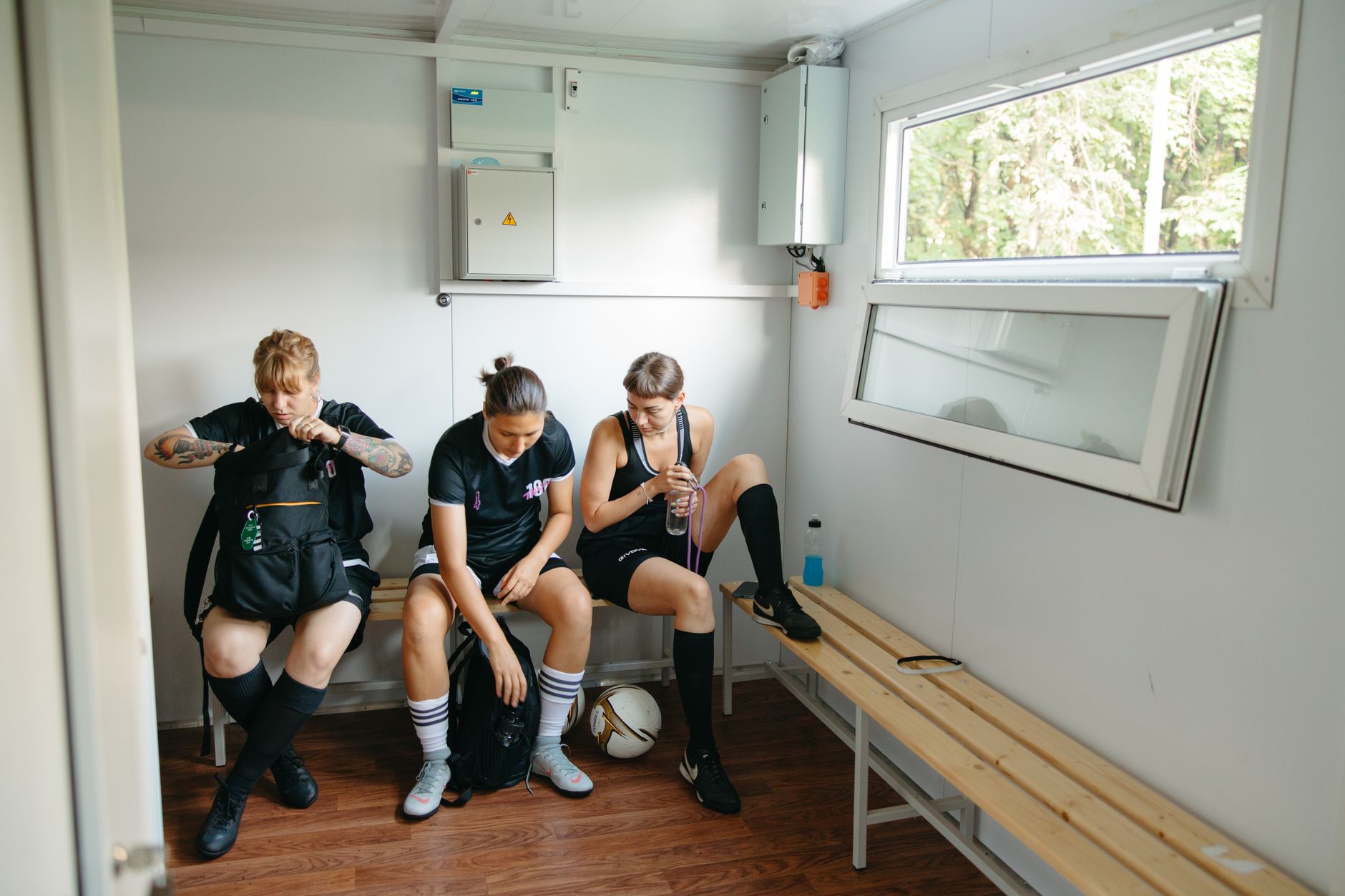
Photo by Anastasia Shuraeva on Pexels
What do these changes mean for players now?
For players now, football fitness training should become a feedback loop: test, train, recover, review, and adjust. You do not need a professional GPS vest or laboratory to start. Record weekly match minutes, sprint repetitions, session rating, sleep duration, soreness, and one performance test such as a 30-metre sprint or Yo-Yo result. After four weeks, compare trends rather than one unusually good or bad day.
Position-specific priorities make the plan more efficient. Goalkeepers need lateral power, landing quality, and repeated low-distance explosive actions. Full-backs and wingers usually require acceleration, deceleration, and high-speed running exposure. Central midfielders need aerobic repeatability, scanning under fatigue, and robust lower-body strength. Centre-backs benefit from first-step power, contact stability, jumping, and short recovery intervals. Strikers need explosive separation, curved runs, and the ability to finish after intense movement.
The most actionable 2026 weekly template looks like this:
- Monday: recovery movement, mobility, and light technical work.
- Tuesday: strength training plus 6–8 acceleration efforts.
- Wednesday: aerobic intervals or small-sided games.
- Thursday: strength training, change of direction, and ball work.
- Friday: short sharp activation with reduced volume.
- Saturday: match or high-intensity simulation.
- Sunday: rest, walking, mobility, and review.
The value is in controlling the inputs. If match minutes rise by 60% after a long inactive period, do not add extra sprint work simply because motivation is high. If your sprint times improve but your repeated efforts collapse, aerobic recovery may be the limiting factor. If strength rises while movement quality falls, mobility or fatigue management may be the constraint.
What are three predictions for football fitness next quarter?
The next quarter will likely favour training systems that combine workload data, position-specific benchmarks, and injury-risk management rather than generic running plans. First, more amateur teams will use smartphone timing apps and simple wellness surveys because they deliver useful trend data at a fraction of the cost of elite GPS platforms. Second, clubs will place greater emphasis on deceleration, hamstring strength, and return-to-play progression because these areas influence availability directly. Third, football content platforms such as Football Insights will connect player fitness indicators with tactical expectations, match predictions, and tournament narratives around the 2026 FIFA World Cup.
The three predictions are:
- Shorter, higher-quality conditioning blocks: Sessions will increasingly use 15–30-second efforts with controlled recovery instead of excessive continuous running.
- Individual workload ceilings: Coaches will adjust training according to match minutes, travel, sleep, and previous injury rather than assigning identical volumes to every player.
- More decision-based fitness work: Small-sided games will include constraints such as two-touch play, transition limits, or positional zones, forcing players to sprint and think simultaneously.
That third prediction matters most. Football fitness is not valuable in isolation; it is valuable when a player can recognise a passing lane, press at the correct moment, or defend space while exhausted. Technical execution under fatigue is the final test of conditioning. Football Insights will continue tracking how these physical variables shape team tactics and 2026 tournament performance.
Frequently Asked Questions
Q: What are football fitness training tips?
A: Football fitness training tips are practical methods for improving endurance, acceleration, strength, agility, mobility, and recovery for match demands. A complete programme usually includes two strength sessions, two high-intensity running sessions, technical work under fatigue, and at least one rest period each week. Players should monitor sprint quality, session difficulty, sleep, soreness, and match minutes so training volume can be adjusted before performance declines.
Q: How often should I do football fitness training?
A: Most amateur players should complete two to four structured fitness sessions weekly, depending on matches and total training time. Two demanding lower-body sessions should normally be separated by at least 24 hours, while maximal sprint work requires generous recovery between repetitions. During a match-heavy week, reduce conditioning volume by approximately 20–40% and preserve speed, mobility, and technical sharpness instead of adding more fatigue.
Q: What is the difference between football endurance and repeat-sprint ability?
A: Football endurance is the ability to sustain and recover from prolonged activity, while repeat-sprint ability is the capacity to perform several high-speed efforts with limited rest. A player may run comfortably for 40 minutes but struggle to repeat six 20-second efforts with 40 seconds of recovery. Train endurance with aerobic intervals and small-sided games, then develop repeat-sprint ability through short, high-quality efforts with controlled recovery.
Q: Why does football fitness training stop improving?
A: Football fitness often stops improving because training lacks progression, recovery, or specificity. Repeating the same 30-minute run for eight weeks creates little new stimulus, while excessive intensity can produce fatigue that masks adaptation. Change one variable at a time, such as adding 5–10% volume, improving recovery, increasing strength load modestly, or introducing more football-specific changes of direction.
Q: How much does an effective football fitness programme cost?
A: An effective football fitness programme can cost nothing beyond access to a pitch, a timer, bodyweight exercises, and consistent record-keeping. Resistance bands, cones, and a basic stopwatch may cost approximately $20–$60, while professional GPS systems can cost hundreds or thousands of dollars. The highest-return investment for most players is coaching feedback and a sustainable weekly schedule, not expensive equipment.
Q: Should I run before or after strength training?
A: Perform speed and acceleration work before strength training, then complete conditioning after strength if both occur in one session. Fatigue can reduce sprint mechanics and force production, so maximal running should receive the freshest nervous system. If endurance is the main goal, placing intervals after strength can work, but separate the sessions by several hours or use different days when possible.
Q: What should I do if football training causes pain?
A: Stop the provoking movement and seek qualified medical or sports-physiotherapy advice when pain is sharp, changes your running mechanics, causes swelling, or persists beyond several days. Mild general muscle soreness can often be managed with light movement, sleep, nutrition, and reduced intensity, but joint pain and recurring hamstring symptoms require more caution. Do not use painkillers to force maximal training without professional guidance.
Football fitness improves when every session has a measurable purpose: faster acceleration, stronger deceleration, better recovery, cleaner movement, or sharper execution under pressure. Start with two high-quality conditioning sessions, two progressive strength exposures, and a simple daily record of sleep, soreness, workload, and match minutes. Review the data after four weeks, then adjust volume rather than guessing. That is the Football Insights advantage: spend your training budget where it changes match performance, and preserve enough capacity to deliver when the game is decided.
Ready to apply these football fitness training tips to your own weekly plan?
Thank you for reading.
Football Insights · The Ledger